

Microsoft DMARC requirements: A comprehensive guide
From May 5, 2025, Microsoft mandates that all organizations sending 5,000 or more emails per day to its consumer services must implement DMARC, SPF, and DKIM to authenticate messages.
Senders must publish a DMARC record with at least a p=none policy and ensure alignment between DMARC and either SPF or DKIM. Non-compliance will result in messages being rejected.
Check out our guide on the Microsoft DMARC requirements to learn more.
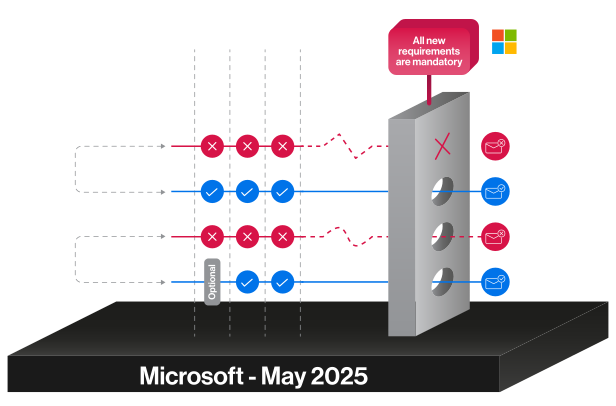
Microsoft DMARC requirements explained
To comply with the Microsoft DMARC requirements, senders must implement:
DMARC
SPF
DKIM
Microsoft’s role in DMARC
Microsoft enforces DMARC, SPF, and DKIM for emails sent to its users, and it provides aggregate reporting for domains whose MX record points to Microsoft infrastructure. But this visibility is limited to Microsoft’s own environment. For full DMARC compliance, domain owners need more than enforcement on a single platform.
That is where Sendmarc complements Microsoft. The Sendmarc platform gathers DMARC reports from thousands of receivers worldwide, not just Microsoft, and enriches them with insights that are easy to interpret and act on. We also help configure SPF, DKIM, and DMARC correctly across all your sending services, preventing legitimate emails from being rejected.
Together, Microsoft and Sendmarc provide complete protection. Microsoft secures your email within its ecosystem, while Sendmarc ensures your domain is fully compliant and protected everywhere your email travels.
Who must comply with the Microsoft DMARC requirements?

Any business sending 5,000 or more messages daily to Microsoft email accounts must meet these requirements.
This includes:
- Internal and hosted email systems
- CRM, ERP, and e-commerce services
- Email marketing platforms
- Transactional emails
- Third-party senders
Failure to comply will result in:
- Increased risk of spoofing and phishing
- Messages being rejected by Microsoft
Sendmarc makes DMARC compliance easy, providing the tools needed to meet evolving requirements.
Book a demo or explore our platform to find out how we simplify DMARC adoption.
Get a copy of the Microsoft DMARC rules
Complete the form below to get this free guide.
Expert insights
“Microsoft’s update is a strong signal that the email ecosystem is maturing. These new requirements aren’t just about compliance—they’re about customer trust. High-volume senders need to step up and treat deliverability and authentication as core parts of their digital brand strategy, not just IT hygiene.”
“While Microsoft’s new requirements apply to bulk senders, I believe every domain should have SPF, DKIM, and DMARC in place. These aren’t just technical best practices—they’re essential for protecting deliverability and reputation. Microsoft themselves say it best: ‘All senders benefit from these practices.’ It’s time the industry starts moving in that direction.”
Microsoft DMARC FAQs
Does Microsoft require DMARC?
Yes, Microsoft requires DMARC for all senders who send 5,000 or more daily emails to Microsoft consumer email platforms, including outlook.com, live.com, and hotmail.com addresses.
What does Microsoft require for DMARC compliance?
To comply with Microsoft’s DMARC requirements, your organization must publish a valid DMARC record for its domain with at least a p=none policy. Additionally, SPF or DKIM must be aligned with the visible “From” domain.
Is DMARC now a requirement for bulk email senders?
Yes, DMARC is now a requirement for bulk email senders targeting Microsoft, Yahoo Mail, and Gmail addresses. Microsoft’s requirement became effective on May 5, 2025.
What happens if I don’t have DMARC in place for Microsoft recipients?
If your business doesn’t implement DMARC for its domain, Microsoft will reject its emails. This could result in reduced deliverability and damage to your business’s sender reputation.