

Is your business at risk of a cyberattack? Find out with our domain checker
Sendmarc analyzes DMARC, SPF, DKIM, and the overall state of your domain setup. We’ve created a tool that scores your organization’s vulnerability to fraudulent email activities like impersonation, phishing, and spoofing.
Our domain checker shows the current risk your domain presents to your organization’s cybersecurity.
If you’re at risk of impersonation, one of our experts will be in touch to assist.
Domain checker: Understanding your Domain Safety Score
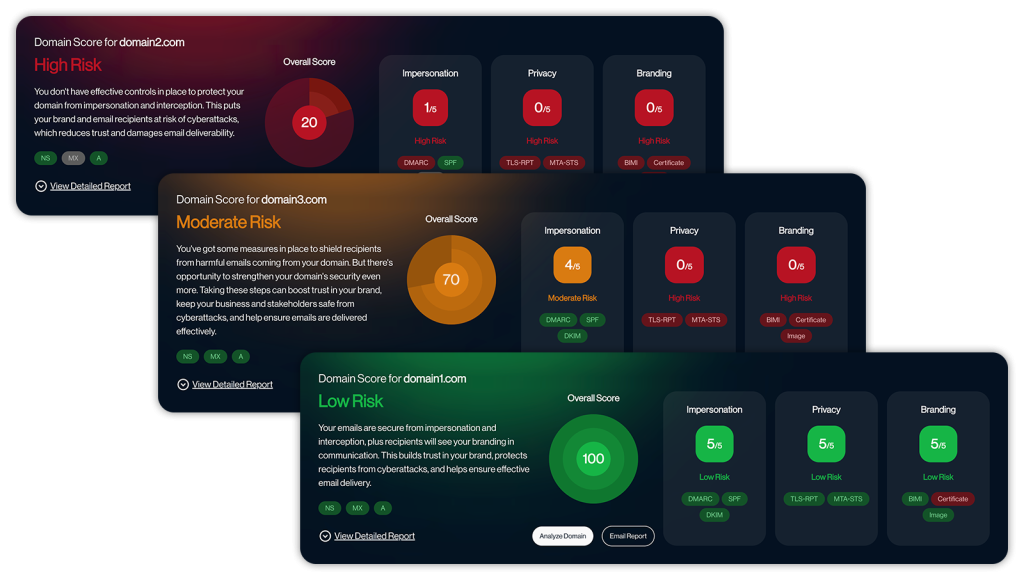
Overall Domain Safety Score
A Domain Safety Score out of 100 is assigned to an organization. Our domain checker calculates this score using three ratings, including Impersonation, Privacy, and Branding, to give you a high-level view of your domain’s vulnerability to email impersonation and interception, as well as how effective your email branding is.
Domain ratings explained

Impersonation Rating
Your Impersonation Rating shows the likelihood of your domain being used in impersonation attacks. The domain checker inspects your DNS settings to ensure they're correctly set up to defend against attacks like this.

Privacy Rating
Your Privacy Rating looks at whether you’re monitoring and enforcing that your mail server providers have been correctly set up to receive TLS-secured SMTP connections. This shows whether your emails can be intercepted and edited by cybercriminals.

Branding Rating
Your Branding Rating assesses whether your organization's domain branding has been correctly set up by reviewing your BIMI record.
Understanding your impersonation rating
Your domain has little to no protection, leaving your business highly vulnerable to cybercriminals exploiting your domain name for email scams.
Your domain configuration needs a last tweak. Without it, a skilled cybercrook could still spoof your domain and legitimate emails might land in Spam or Junk.
Great news! Your organization has very low risk of your domain name being used in fraudulent emails. A score of 5 means you’re 100% DMARC compliant and protected from impersonation and phishing attacks.
My impersonation rating is between 0 and 4.
Why should I care?
If your domain rating is between 0 and 4, your business is vulnerable to email-based attacks including impersonation, phishing and spoofing to name a few.
These are potentially devastating threats to your organization that could lead to:


Reputational damage
The use of your brand’s name in fraudulent email activities reduces the trust of staff, customers, partners and other stakeholders in your organization, damaging your good reputation and ultimately reducing client and partner willingness to do business with you.


Financial loss
Email-based cyberattacks trick users into revealing sensitive information that can result in unauthorized transactions or direct financial fraud. The cost of dealing with these attacks, including legal fees, compensation, and additional cybersecurity measures can also be substantial.


Data breaches
A lack of DMARC protection increases the risk of successful email-based attacks in which your data can be accessed, stolen or compromised. Data breaches can expose personal information, trade secrets, and other critical data, leading to severe legal and financial repercussions.


Operational disruption
Without the necessary email authentication protocols in place, emails often land in Spam or Junk folders, causing interrupted communication or missed marketing opportunities. A successful impersonation attack can also lead to downtime to resolve issues, restore data and implement additional security.


Compliance penalties
Many rules and regulations from the likes of Google, Yahoo, PCI DSS, GDPR, HIPPA and more, require organizations to implement strong email security measures including DMARC. Some of them have even made DMARC mandatory. Failure to comply can result in legal action and other penalties.
Implementing DMARC with Sendmarc will help protect your organization against these threats and damages by preventing unauthorized use of your domain and ensuring that only real emails from your domain ever reach an inbox.