

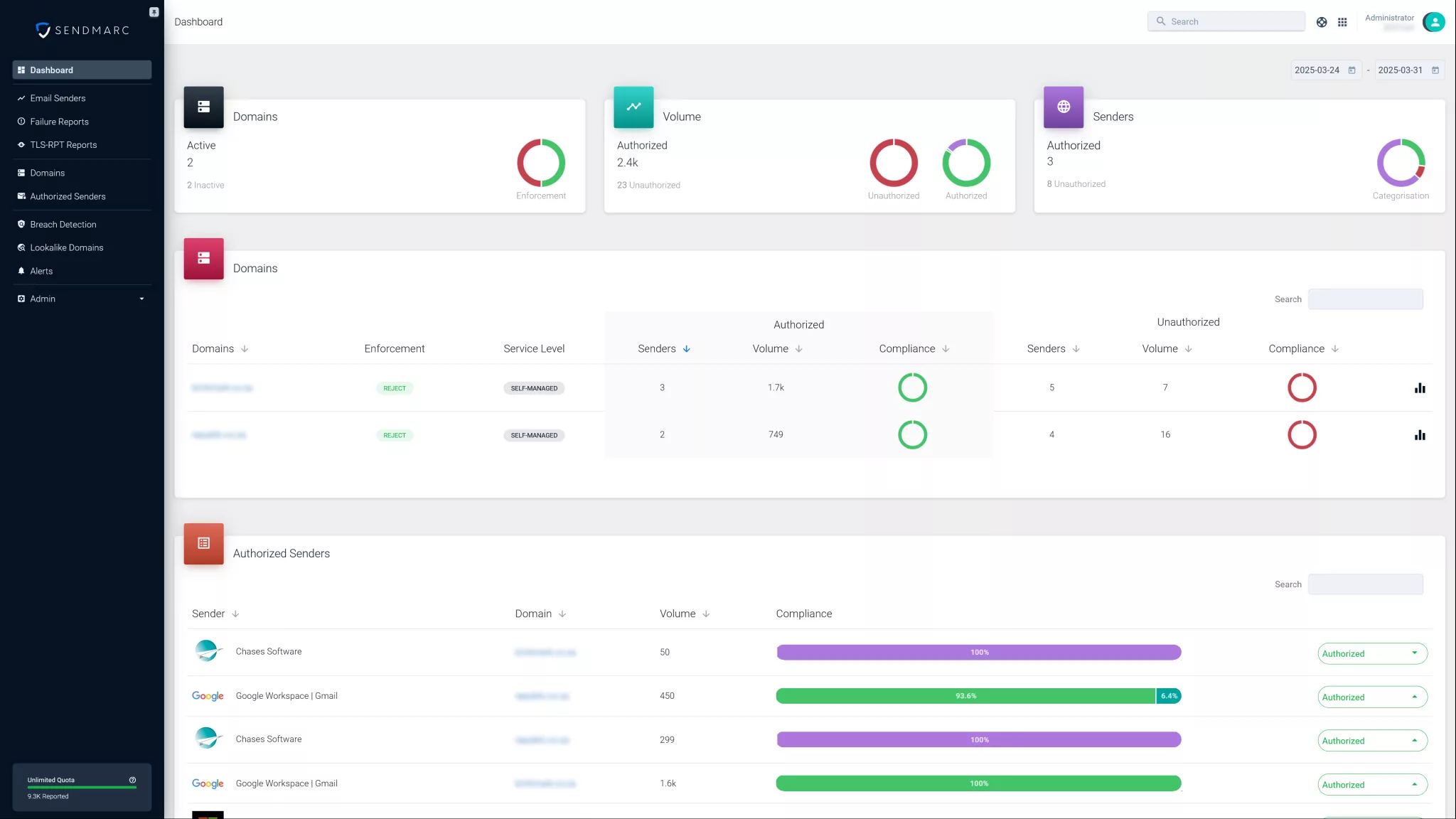
Navigating the DMARC platform architecture
Understanding DMARC is essential before using a DMARC management platform. DMARC builds on two foundational email authentication protocols:
- Sender Policy Framework (SPF): SPF allows domain owners to specify which IP addresses are authorized to send emails on their behalf. This is done by publishing an SPF record in the DNS. When an email is received, the recipient’s email server checks the SPF record to verify that the sending IP address is authorized.
- DomainKeys Identified Mail (DKIM): DKIM adds a cryptographic signature to outgoing emails. This signature is verified by the recipient’s email server using a public key published in the DNS. This ensures the email content hasn’t been altered during transit.
DMARC ties these two protocols together by specifying how receiving email servers should handle messages that fail SPF or DKIM checks. It also provides a reporting mechanism that sends feedback to domain owners about email authentication results.
How our DMARC platform architecture works
Sendmarc’s DMARC platform automates and streamlines the entire DMARC process, offering:
- DNS record management: Our DMARC platform helps generate and publish DMARC, SPF, and DKIM records with step-by-step guidance, eliminating guesswork and reducing errors.
- Data collection and processing: Receiving email servers send DMARC aggregate and failure reports in XML format. Our DMARC management platform automatically collects, reads, and analyzes these reports, transforming complex data into actionable insights.
- Policy enforcement: Based on the insights, users can confidently enforce DMARC policies ranging from monitoring (p=none) to strict rejection (p=reject).
- SPF optimization: SPF records can become overly complex, especially for organizations using multiple third-party services. Sendmarc’s DMARC platform includes SPF flattening capabilities that optimize SPF records, ensuring they stay within the DNS lookup limit, which enhances compliance and performance.
- Threat intelligence and alerts: Our DMARC platform continuously monitors suspicious activity, such as unauthorized senders or phishing attempts, and provides real-time alerts to enable rapid response.
- Compliance support: Our solution supports compliance with regulations such as the GDPR and PCI DSS by securing email channels and providing auditable reports.
This layered and automated architecture empowers businesses to maintain a secure, compliant, and efficient email environment.
DMARC platform integrations
A powerful DMARC platform must integrate seamlessly with existing IT infrastructure and security tools. Our DMARC platform offers a range of integrations to enhance usability and security:
Single Sign-On (SSO):
Managing user access securely is critical for companies of all sizes. Our DMARC platform supports SSO integration with popular Identity Providers (IdPs), including:
- Okta
- Google Workspace
- Microsoft 365/Entra
By enabling SSO, organizations can centralize user authentication, reduce password fatigue, and enhance security.
API integration:
For businesses with complex IT environments, our DMARC platform provides full API access that enables:
- Automation of critical tasks
- Integration with SIEM systems
This API-first approach ensures that our DMARC platform can be incorporated into broader cybersecurity and IT frameworks.
PSA integration:
To support MSPs and IT service teams, our DMARC platform also integrates with leading PSA tools. PSA integration allows you to:
- Sync customer data automatically
- Streamline ticketing workflows
- Simplify billing processes
Easily connect Sendmarc to your Autotask, ConnectWise, or HaloPSA account.
Support for email authentication standards:
Beyond DMARC, the platform supports related email standards and protocols, including:
- Brand Indicators for Message Identification (BIMI): Enables brand logos to appear in recipients’ inboxes, enhancing brand recognition and trust
- Mail Transfer Agent Strict Transport Security (MTA-STS): Ensures encrypted email transport between servers, protecting messages in transit
- Transport Layer Security Reporting (TLS-RPT): Provides reports on encrypted email delivery failures, improving visibility
Ready to see our DMARC platform in action?
Book a personalized demo with our experts to explore how our tool simplifies email security management and protects your company’s domain.
Or, start a free trial today to experience how our DMARC management platform can enhance email deliverability and security.
Benefits of using a DMARC platform
Implementing and managing DMARC without a dedicated platform can be complex and resource-intensive. Here are the key benefits of using a DMARC management platform:
Comprehensive visibility and control
Our DMARC platform transforms complex reports into clear data. Organizations gain full visibility into who’s sending emails on their behalf and how their domain is being used, enabling informed decision-making.
Simplified compliance
Email security is a critical component of regulatory compliance frameworks such as PCI DSS. Our DMARC platform provides auditable reports and helps maintain compliance by securing email channels.
Operational efficiency
Automating record management, report analysis, and SPF optimization reduces manual workload and minimizes configuration errors. This allows IT teams to focus on strategic initiatives.
Centralized user management
SSO integration simplifies user access management and enhances security by enforcing business-wide authentication policies.
Brand protection and trust
By reducing the risk of domain spoofing and enabling BIMI, brand reputation is strengthened, and customers gain confidence in company communications.
Ready to safeguard your organization’s domain?
Sign up today and experience the benefits of a comprehensive DMARC management platform.